

Fast-Tracked City Unbounded? The Urban Manifestations of Global East
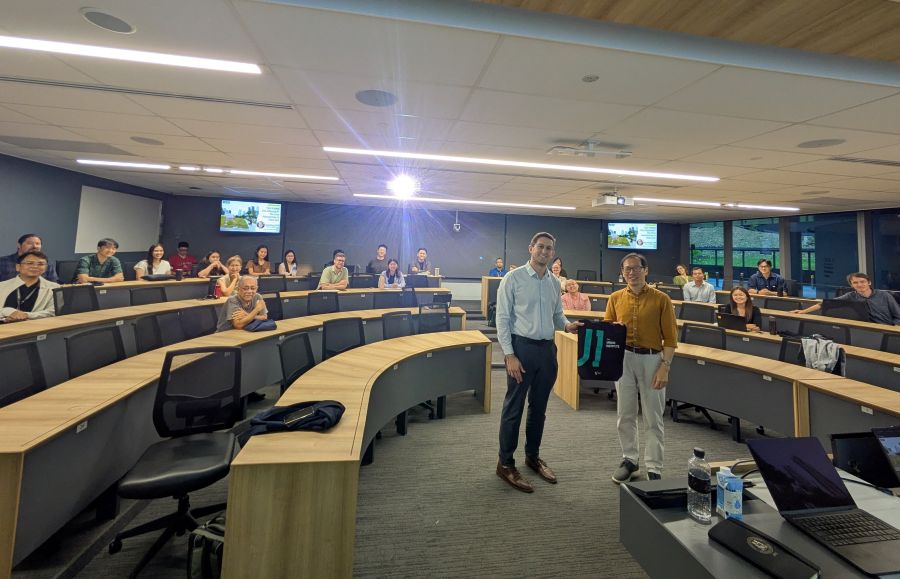
What happens when the accelerated urban-development experiences of East and Southeast Asia travel overseas?
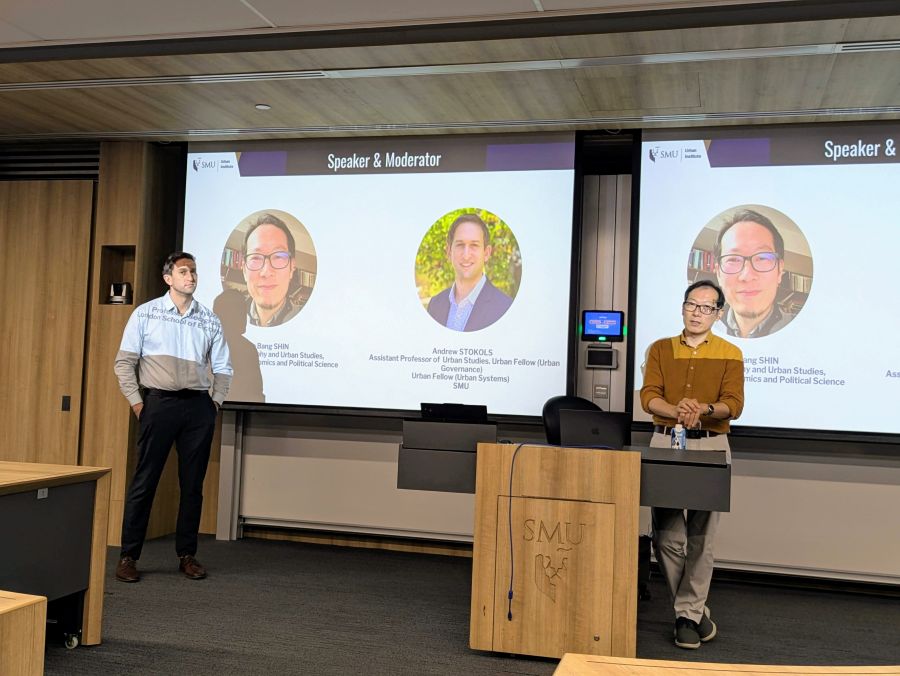
We were delighted to host Hyun Bang Shin, FAcSS, Professor of Geography and Urban Studies in the Department of Geography and Environment at the London School of Economics and Political Science (LSE), and Visiting Professor at the SMU Urban Institute, for a thought-provoking seminar moderated by Andrew Stokols, Assistant Professor of Urban Studies at SMU College of Integrative Studies and UI’s Urban Fellow (Urban Governance).
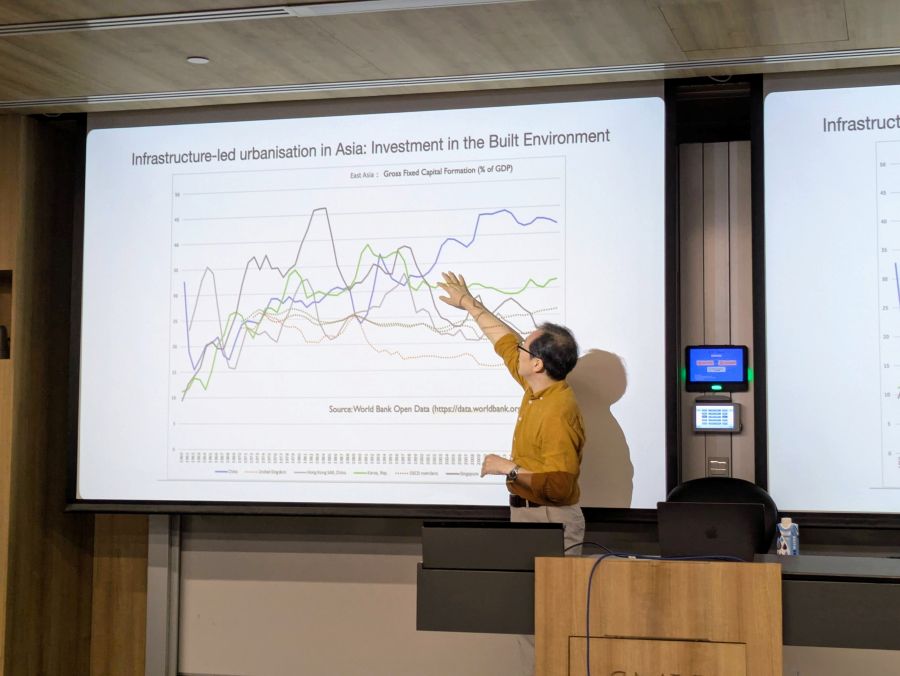
Prof. Hyun introduced the concept of fast urbanism, referring to forms of rapid, large-scale urban development shaped by compressed economic growth, strong state capacity, and close relationships between the state and capital. In economies such as South Korea, Singapore, Taiwan, and China, rapid urban development has often been closely associated with processes of economic “catch-up”.
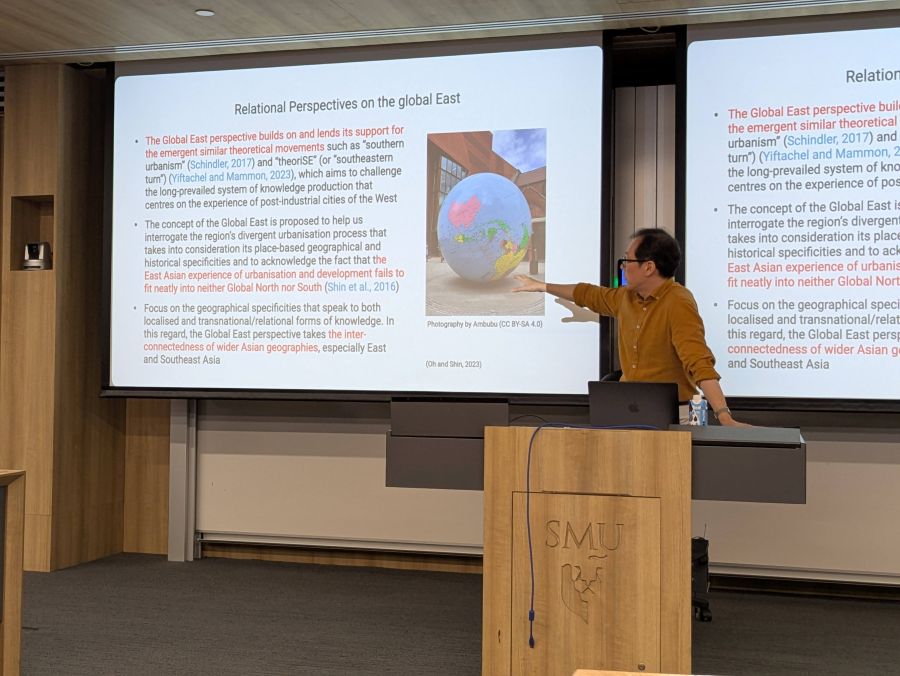
He also proposed the Global East as a way of understanding these experiences without fitting them neatly into the familiar binaries of the Global North and Global South. The concept draws attention to the distinct yet globally interconnected political, economic, and urban trajectories of East and Southeast Asia.
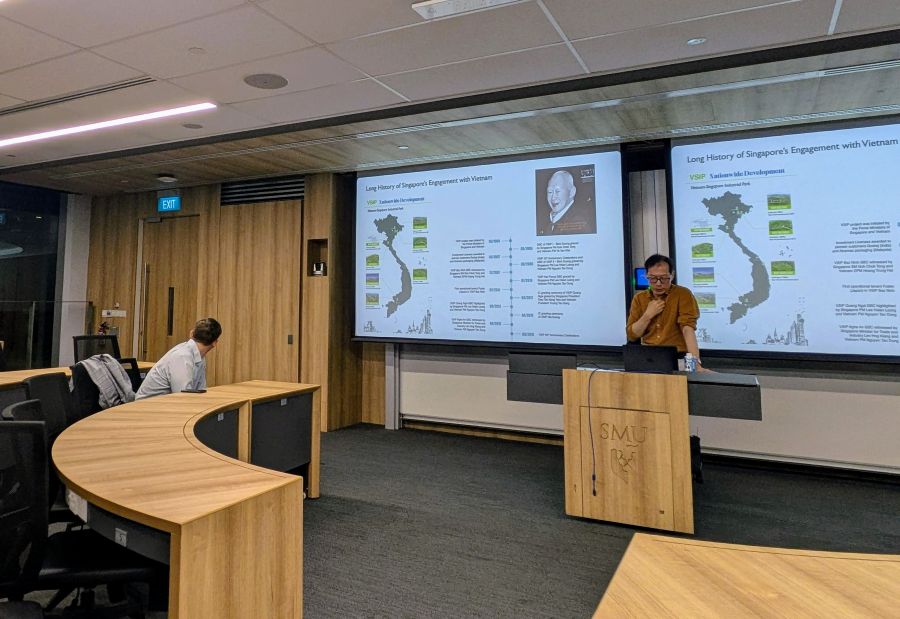
Through cases including Chinese developers operating in London and Malaysia, and South Korea’s Land and Housing Corporation in Kuwait, Prof. Hyun examined how urban-development expertise, capital, and ambitions travel across borders. These models, however, do not simply transfer from one context to another. They encounter different planning systems, housing aspirations, institutional arrangements, and local temporalities, often resulting in unexpected adaptations and transformations.
A central question emerging from the discussion was: whose futures are accelerated, and whose lives are put on hold? Urban development does not only produces uneven spaces; it also creates unequal experiences of time. While some actors benefit from faster construction, speculation, and investment, others—including displaced residents and communities facing redevelopment—may have little time to respond to or influence decisions that shape their futures.
The lively Q&A explored the social and psychological costs of constantly accelerated development, whether ideas of growth should be reconsidered around sustainability and wellbeing, and how researchers can avoid treating places such as China and Korea, or institutions such as the state, as monolithic and isolated entities.
As Prof. Hyun reminded us, the key question is not simply whether exported urban projects “succeed”, but what they produce, how they mutate in new contexts, and which power relations they sustain or transform along the way.
We are grateful to Hyun for the stimulating session, Andrew for moderating the discussion, and everyone who joined us and contributed thoughtful questions and reflections.