

Trans-Pacific Sustainability Dialogue 2026: Responsible Consumption and Production
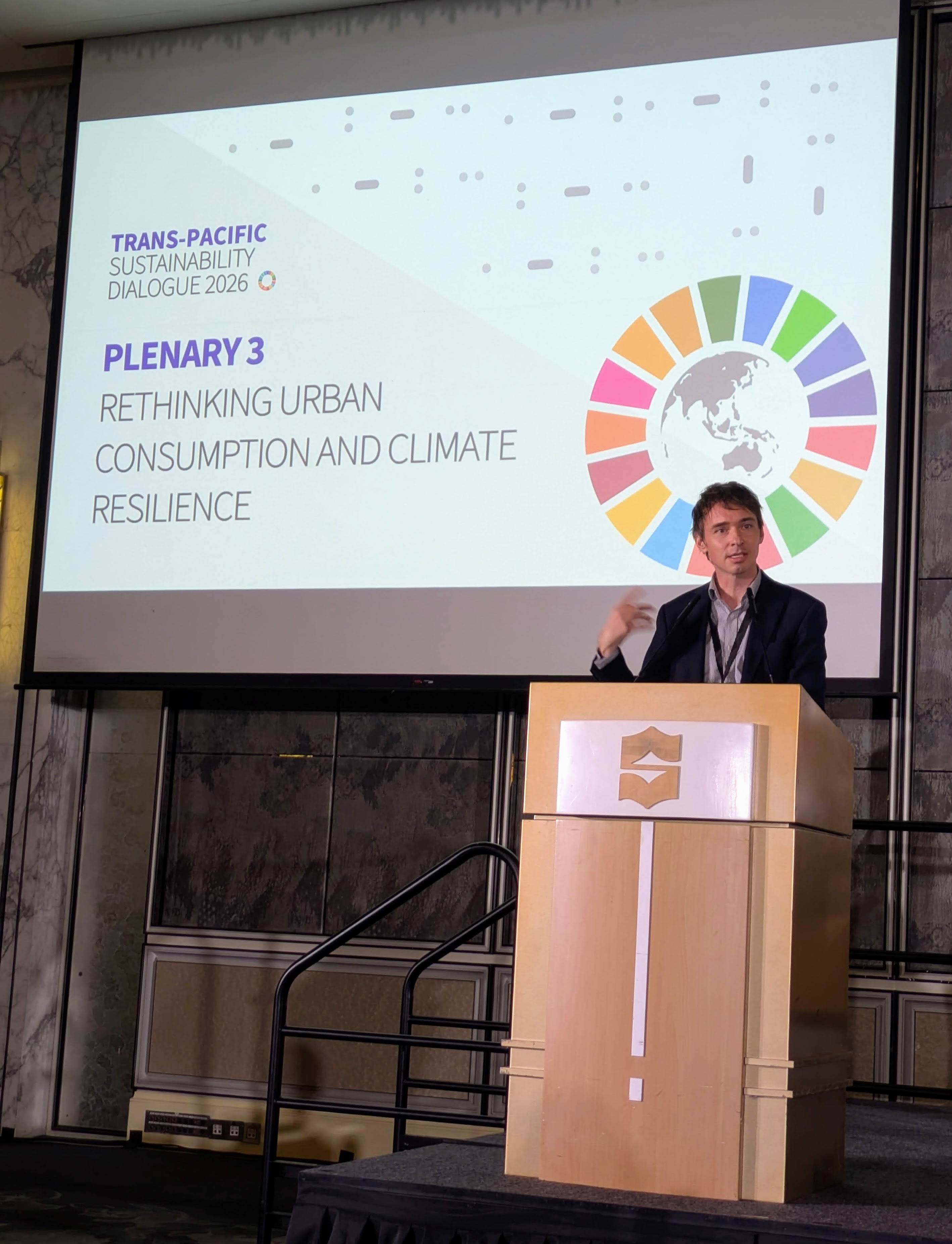
What does putting people at the centre mean for climate resilience and sustainable AI? This question shaped discussions at the 2026 Trans-Pacific Sustainability Dialogue in Singapore, organised by the Stanford Shorenstein Asia-Pacific Research Center and the Ban Ki-moon Foundation for a Better Future, and co-hosted by Singapore Management University (SMU).
SMU contributed to two plenary sessions, bringing together perspectives on urban consumption, climate resilience, sustainable livelihoods and the responsible development of artificial intelligence.
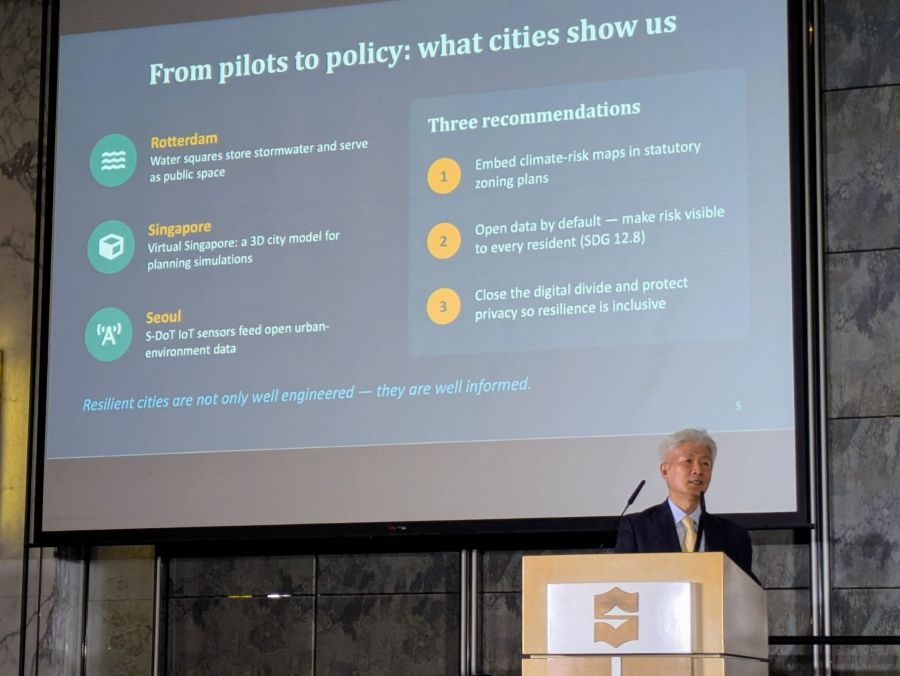
Rethinking Urban Consumption and Climate Resilience
Moderating the first plenary, Rethinking Urban Consumption and Climate Resilience, Prof Orlando Woods, Director of the SMU Urban Institute, highlighted persistent funding and governance gaps, competing interests and entrenched practices that constrain progress. The discussion explored the changes needed across urban planning, consumption patterns, communities and livelihoods.
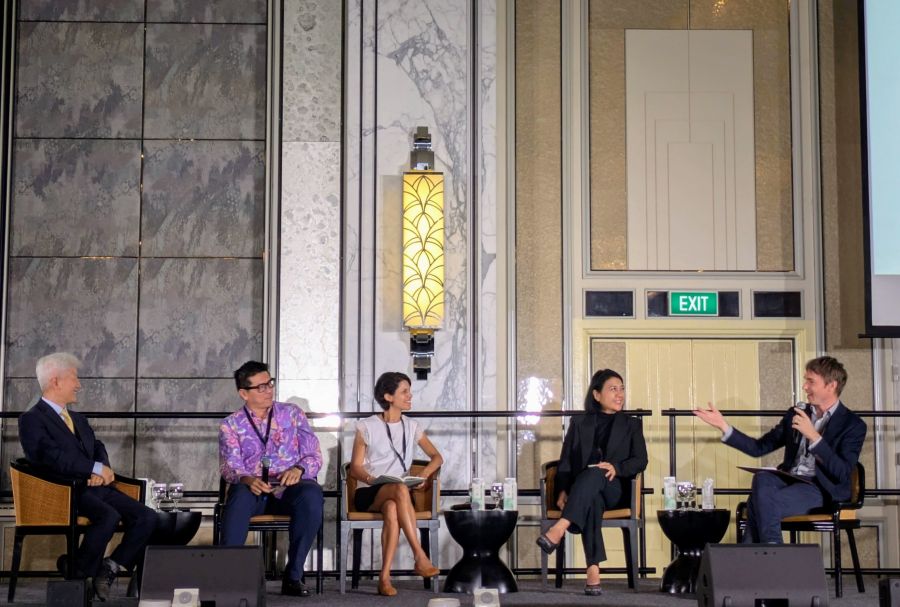
Key perspectives from the panellists included:
🌏 Strengthening preparedness: Prof Tae Yong Jung of Yonsei University emphasised the importance of proactive climate preparedness. Cities need to act before disasters strike by using climate risk mapping and accessible data, while addressing digital inequalities that may prevent communities from accessing critical information.
🏙️ Building more resilient and inclusive cities: Prof Winston Chow, Pillar Lead (Urban Systems) at the SMU Urban Institute, SMU College of Integrative Studies and Co-Chair of IPCC Working Group II, outlined three priorities: building back better after disruptions, enabling sustainable consumption through the Avoid, Shift and Improve (ASI) framework, and looking beyond average indicators to ensure that vulnerable groups are not overlooked.
🌿 Connecting climate action with everyday life: Prof Perrine Hamel of Nanyang Technological University Singapore broadened the discussion by highlighting how connections between climate action, food, recreation and everyday relationships with nature can make sustainability more tangible. She also stressed the importance of community participation and coordination across institutions in translating ideas into practice.
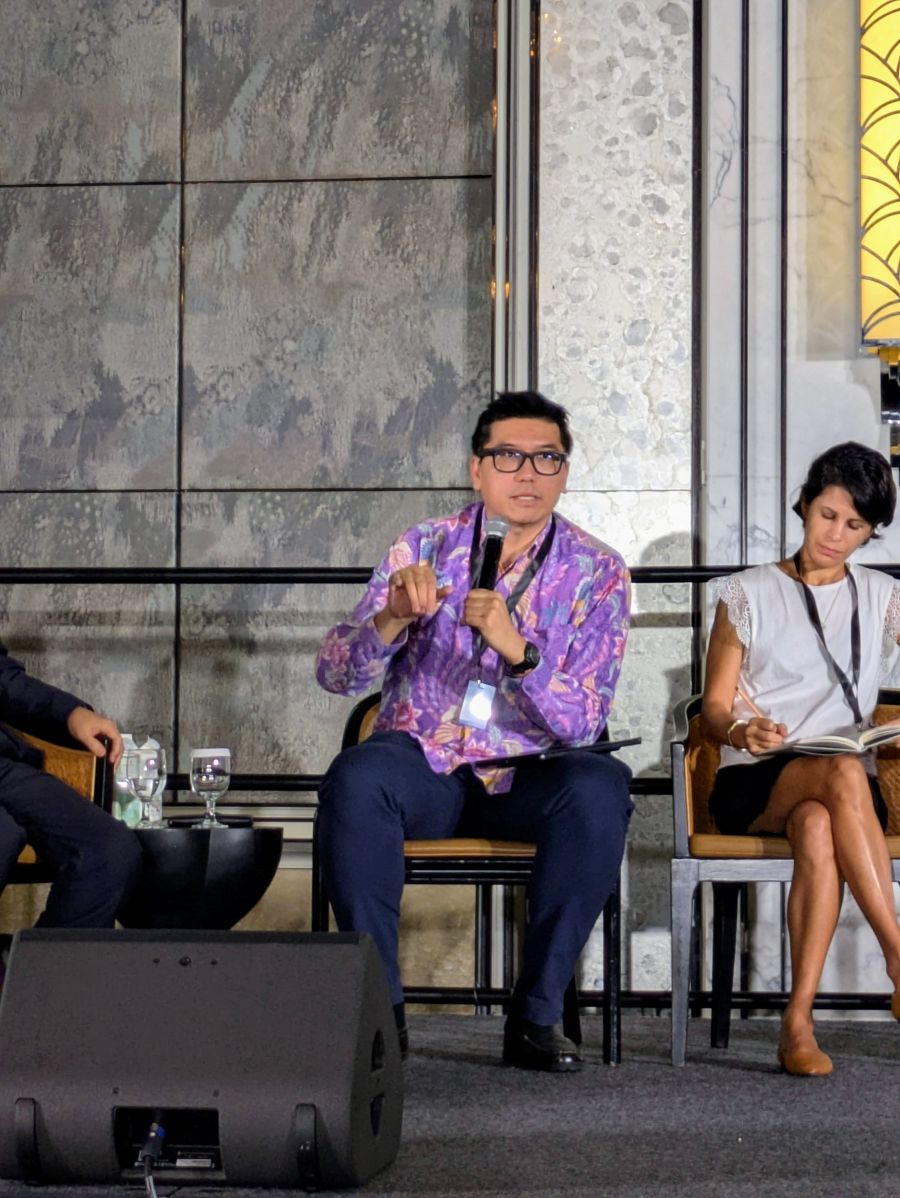
🤝 Supporting livelihoods through digital connectivity: Bringing the discussion closer to everyday experiences, Ibu Yasmin Wirjawan, Fellow at the Center for Human Rights and International Justice at Stanford University and CEO of Ancora Foundation, drew on her research on digital connectivity. She emphasised that people need affordable tools, reliable information and financial support to participate meaningfully in climate action.
In his closing reflections, Prof Woods returned to the importance of governance capacity, social equity and financing in building resilience, raising a fundamental question: who is responsible, and how can people be empowered to act on that responsibility?
Governing Sustainable AI
The second plenary, Governing Sustainable AI, featured two further SMU perspectives, examining how artificial intelligence can support societal well-being while addressing its environmental and governance implications.
🧠 AI as augmented intelligence: Dr Weiyang Cheong, Vice Provost for Strategic Research Partnerships and Interim Co-Director of the Longevity Societies and Economies Institute, framed AI as a form of augmented intelligence that can complement the experience of older workers and support preventive healthcare. He emphasised the importance of combining AI capabilities with human expertise, alongside responsible data governance and clear accountability.
⚡ Advancing energy research while addressing AI's environmental footprint: Prof Can Cui highlighted how AI can accelerate energy research and translate research findings into practical tools for policymakers and industry. She also drew attention to AI's electricity demands and the need for more circular approaches to its hardware and infrastructure.
Across both plenaries, a common theme emerged: technological innovation and sustainability transitions must ultimately serve people. Whether strengthening climate resilience or governing AI responsibly, progress depends not only on technological capabilities, but also on inclusive governance, social equity, accessible resources and meaningful participation.
We thank the organisers, speakers and participants for their thoughtful contributions and engaging exchanges at the 2026 Trans-Pacific Sustainability Dialogue.