Global Firm Expansion and the Rise of Consumer Cities in South and Southeast Asia
As multinational companies continue to diversify their operations across South Asia and Southeast Asia, their influence extends beyond economic activity, shaping how people work, live, consume and experience cities.
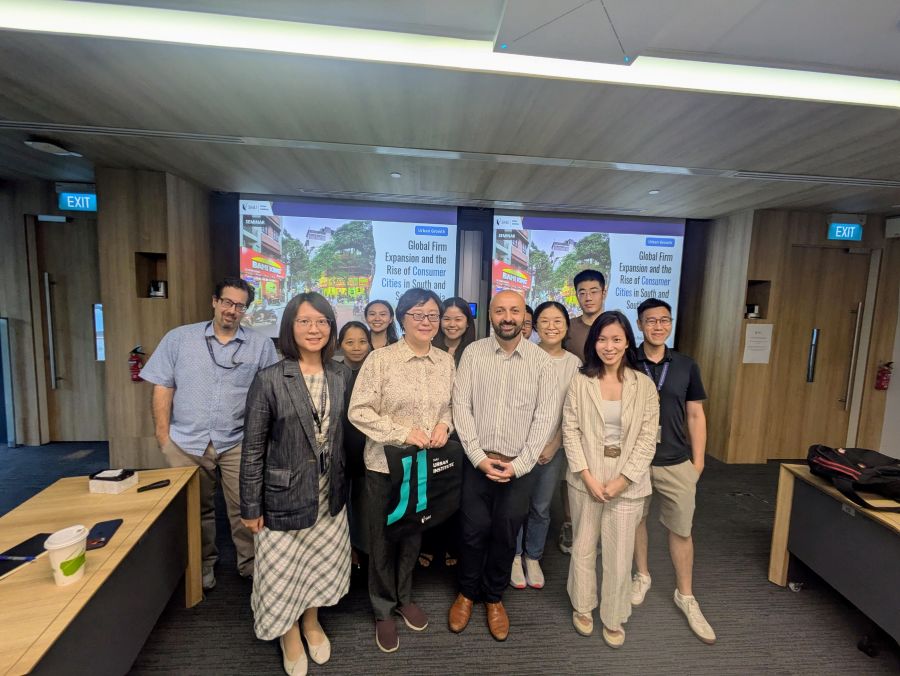
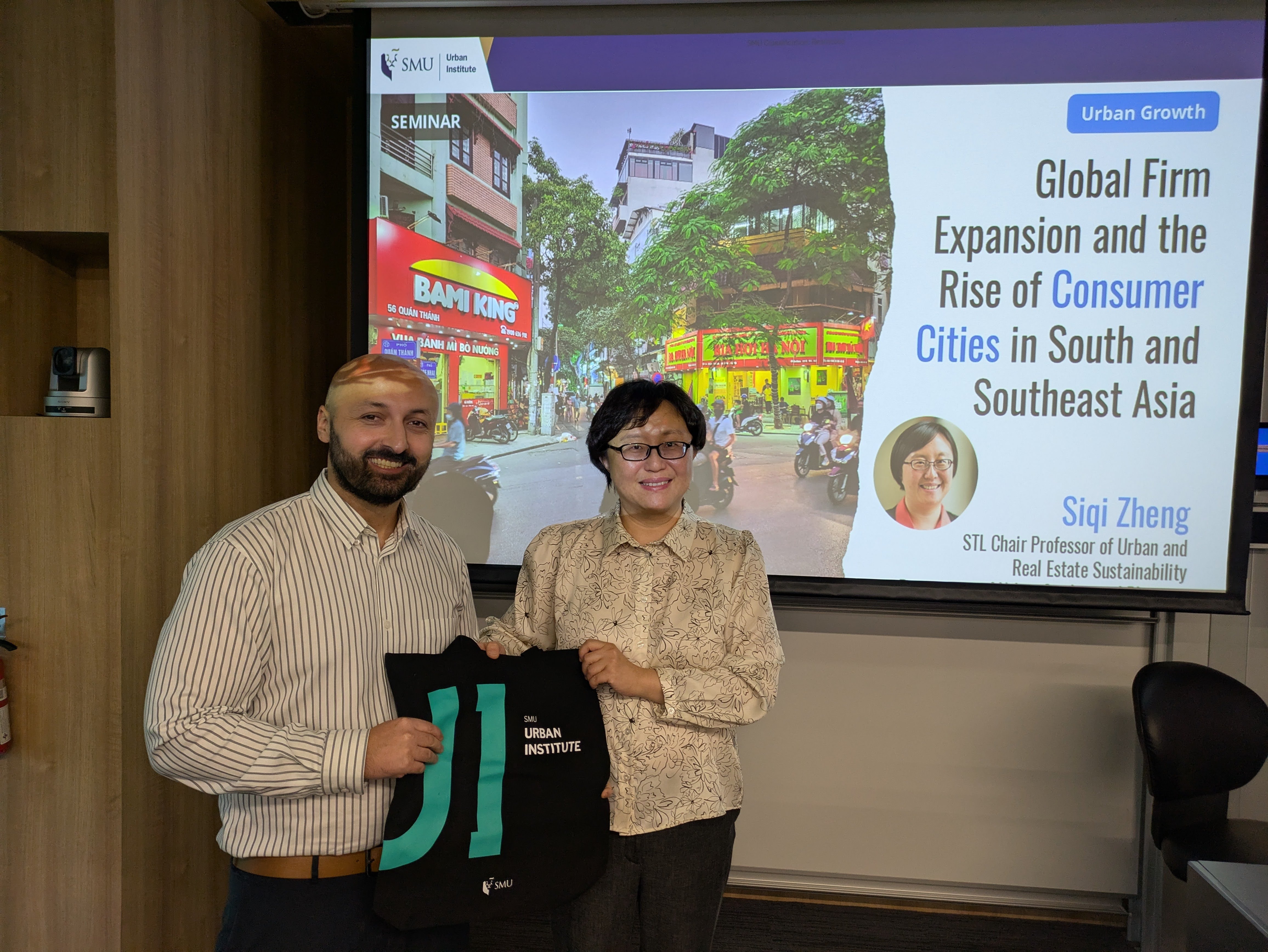
On 28 October, we were pleased to welcome Prof Siqi Zheng, STL Chair Professor of Urban and Real Estate Sustainability at the Massachusetts Institute of Technology (MIT), Director of the MIT Sustainable Urbanization Lab and Visiting Professor at the SMU Urban Institute, for a seminar exploring the wider urban impacts of global investment.
Drawing on her research, Prof Zheng examined how multinational investment can generate benefits that extend beyond conventional economic indicators such as employment, productivity and GDP, highlighting its role in shaping local economies, urban vibrancy and environmental outcomes.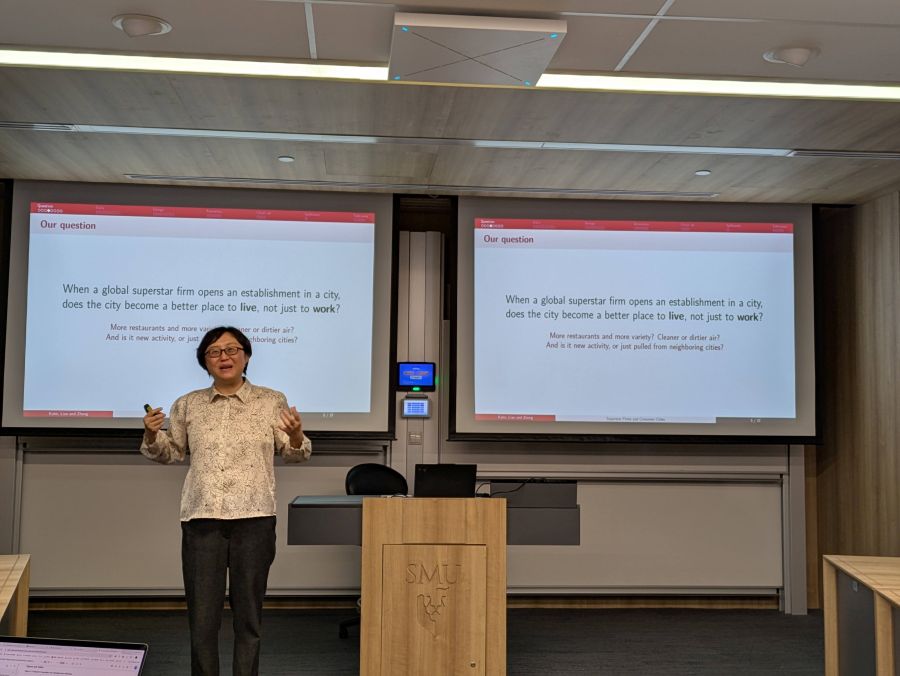
Key insights from the seminar included:
🏭 Beyond jobs and investment: Drawing on fieldwork in Vietnam, Prof Zheng illustrated how the arrival of new factories can stimulate broader local economic activity. In addition to creating jobs and attracting investment, factories bring workers and managers into surrounding areas, increasing purchasing power and supporting the growth of restaurants, shops and other local services.
🍜 Driving more vibrant and diverse urban life: Her research found that a doubling of multinational firm entry over the preceding three years was associated with 33% more restaurants and 18% greater cuisine diversity. Restaurants offering cuisines from the firms' home countries experienced particularly strong growth, demonstrating how global investment can enrich local consumption patterns and urban experiences.
🌱 Balancing economic growth and environmental sustainability: Economic expansion does not necessarily have to come at the expense of the environment. Prof Zheng highlighted how local energy infrastructure influences the environmental effects of firm expansion, with cities that have greater access to renewable energy better positioned to accommodate new investment while limiting pollution.
🏙️ What attracts global investment? Proximity to ports and airports, established business networks and trade relationships all play a role in shaping firms' location decisions. The expansion of major multinational companies can also signal new opportunities, encouraging other businesses to enter and develop around emerging economic hubs.
The seminar was moderated by Prof Theodor Cojoianu of the SMU College of Integrative Studies and Urban Fellow (Urban Growth). The ensuing discussion explored how these dynamics might differ between established cities such as Singapore and emerging urban centres, as well as their longer-term implications for migration, housing affordability and urban governance.
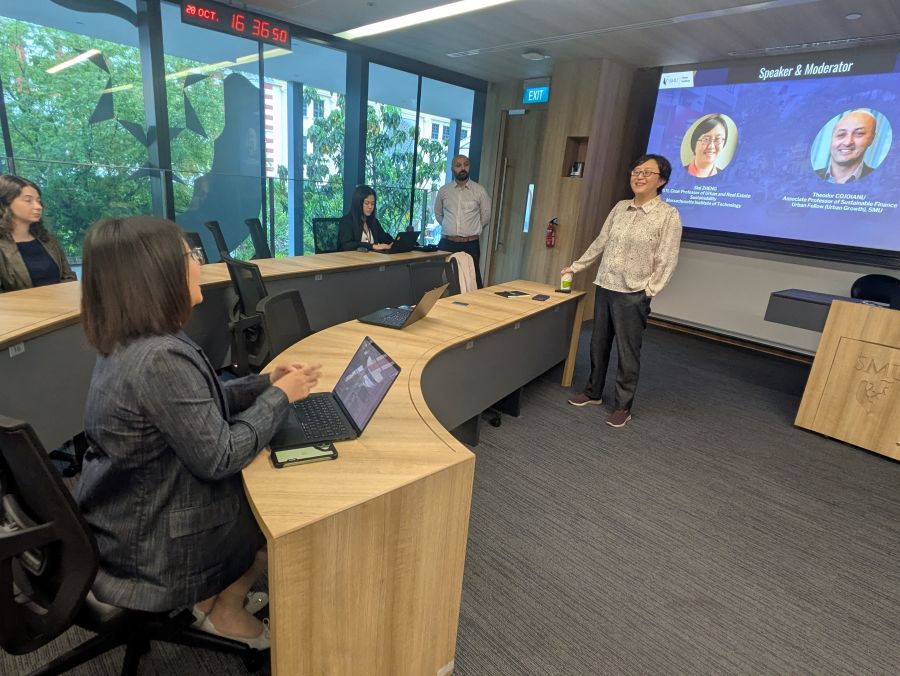
The exchange highlighted the importance of looking beyond traditional economic measures when assessing the impact of global investment. Understanding how multinational activity shapes local communities, urban amenities and environmental outcomes is essential to building more inclusive, vibrant and sustainable cities.
We extend our sincere thanks to Prof Siqi Zheng for sharing her research and insights, Prof Theodor Cojoianu for moderating the discussion, and all participants for their thoughtful contributions.