

Book Talk: Neoliberalism and Hindutva in the making of an Indian smart city
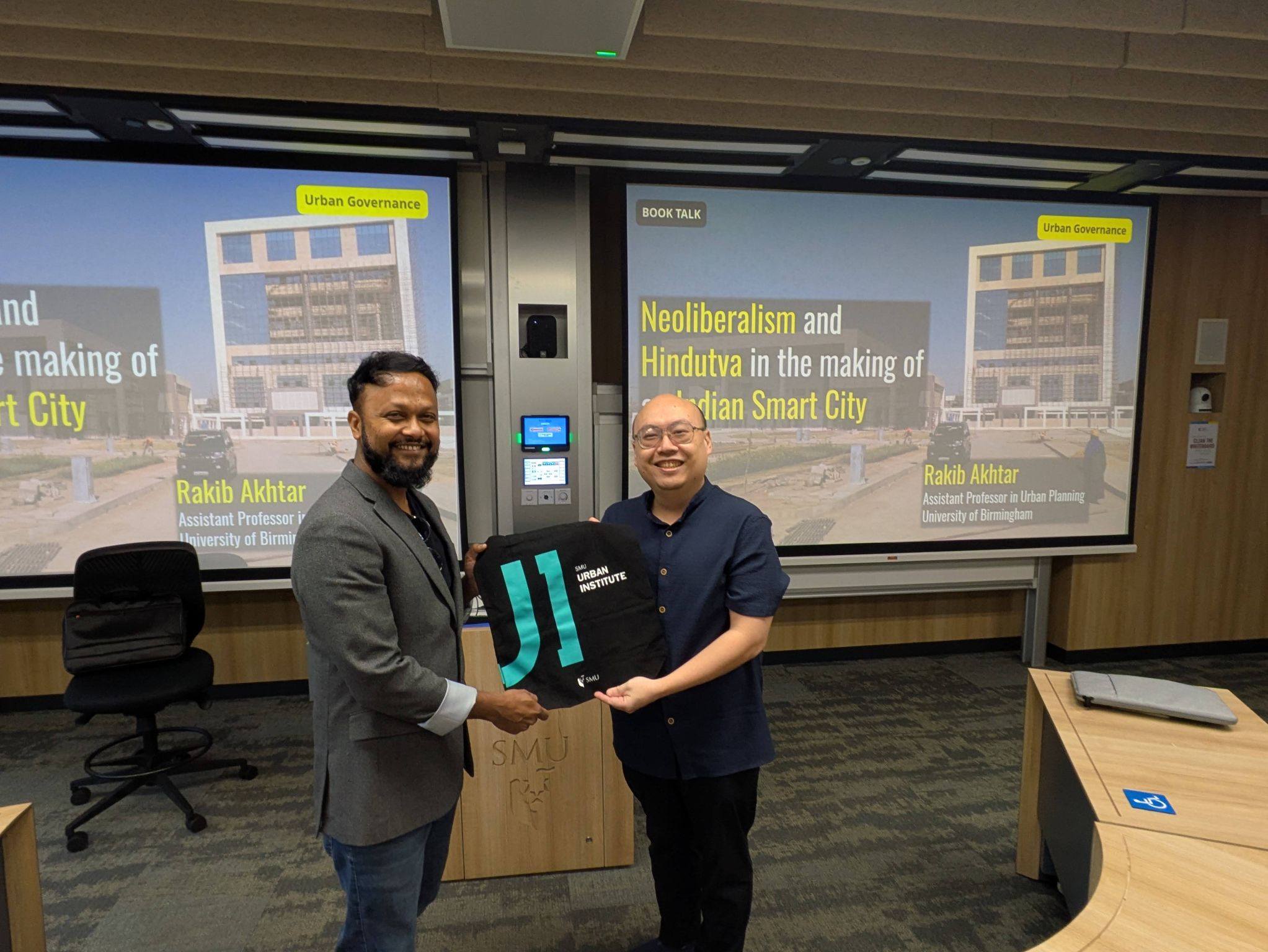
The SMU Urban Institute recently hosted a book talk featuring Dr Rakib Akhtar from the University of Birmingham, moderated by Prof. George Wong, Urban Fellow (Urban Experiences) at the SMU Urban Institute. The session explored key themes from Dr Akhtar’s newly published book by Cambridge University Press (2025), offering a critical examination of the political and social forces shaping contemporary smart city development.
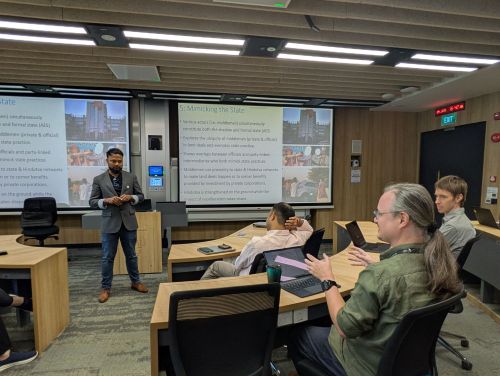
Moving beyond conventional understandings of smart cities as technology-driven urban solutions, Dr Akhtar argued that urban transformation is deeply influenced by broader political and economic processes. Drawing on extensive fieldwork in India, he examined how neoliberal reforms and Hindutva politics intersect to shape urban development agendas, often influencing questions of identity, citizenship, and power.
Central to the discussion was the case of Dholera, a planned smart city in Gujarat that has been promoted as a flagship vision of India’s urban future. Dr Akhtar highlighted how local communities have experienced decades of successive development promises—from irrigation projects and dams to airports and smart city initiatives—without seeing meaningful improvements in their everyday lives. As one resident reflected, “Development neither reaches us nor leaves us,” capturing the enduring uncertainty surrounding such projects.
The talk also introduced the concept of the “actually existing state,” a framework that examines how state actors, private interests, and political movements collaborate to advance large-scale urban development projects. Dr Akhtar argued that these partnerships can produce uneven outcomes, where ambitious visions of progress and modernity often obscure persistent inequalities on the ground.'
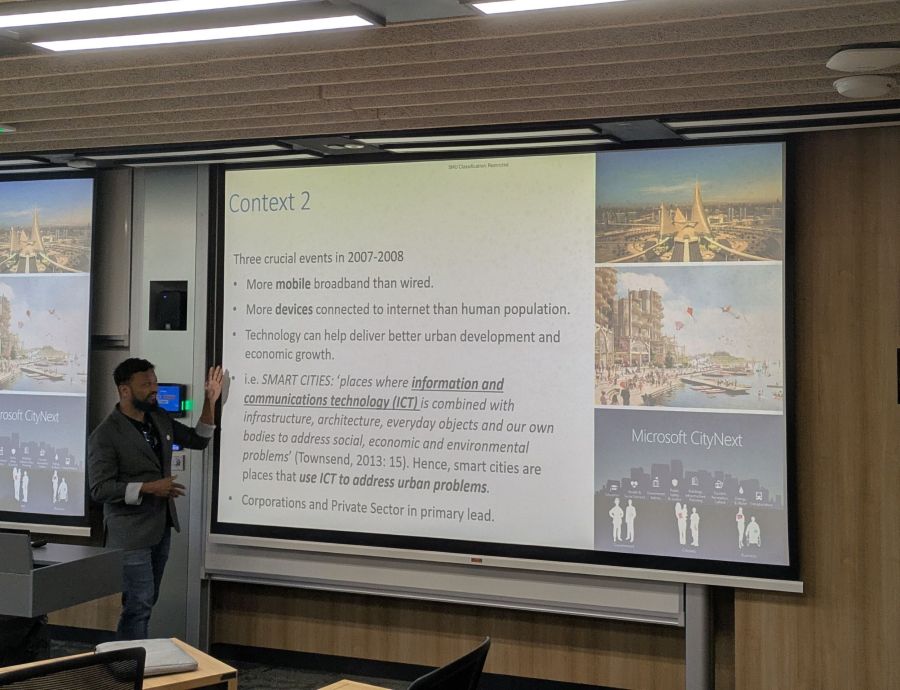
Particular attention was given to the experiences of farming communities facing land acquisition and displacement. The discussion explored how political affiliations, social identities, targeted subsidies, and electoral strategies can shape local responses to development, even when communities face significant economic and social risks. Dr Akhtar also highlighted the challenges encountered by some landowners who receive compensation payments but lack the financial resources or support needed to navigate long-term economic transitions.
While grounded in the Indian context, the discussion raised broader questions relevant to Singapore and Southeast Asia, where rapid digitalisation, urban innovation, and market-oriented development strategies continue to reshape cities. The session encouraged participants to consider not only whether smart cities emerge, but also who designs them, who benefits from them, and who bears the costs of urban transformation.
The SMU Urban Institute extends its appreciation to Dr. Akhtar for sharing his research and insights, to Prof. George Wong for moderating a thought-provoking discussion, and to all attendees whose questions and perspectives contributed to a lively and engaging exchange.