

On CNA: Shaping the Future of Cities Through AI, Resilience and Governance
During the World Cities Summit 2026, faculty from the SMU Urban Institute were featured in two Channel NewsAsia (CNA) stories examining some of the most pressing challenges and opportunities facing cities today, from the transformative potential of artificial intelligence to the urgent need for climate resilience.
Artificial Intelligence and the Future of Cities
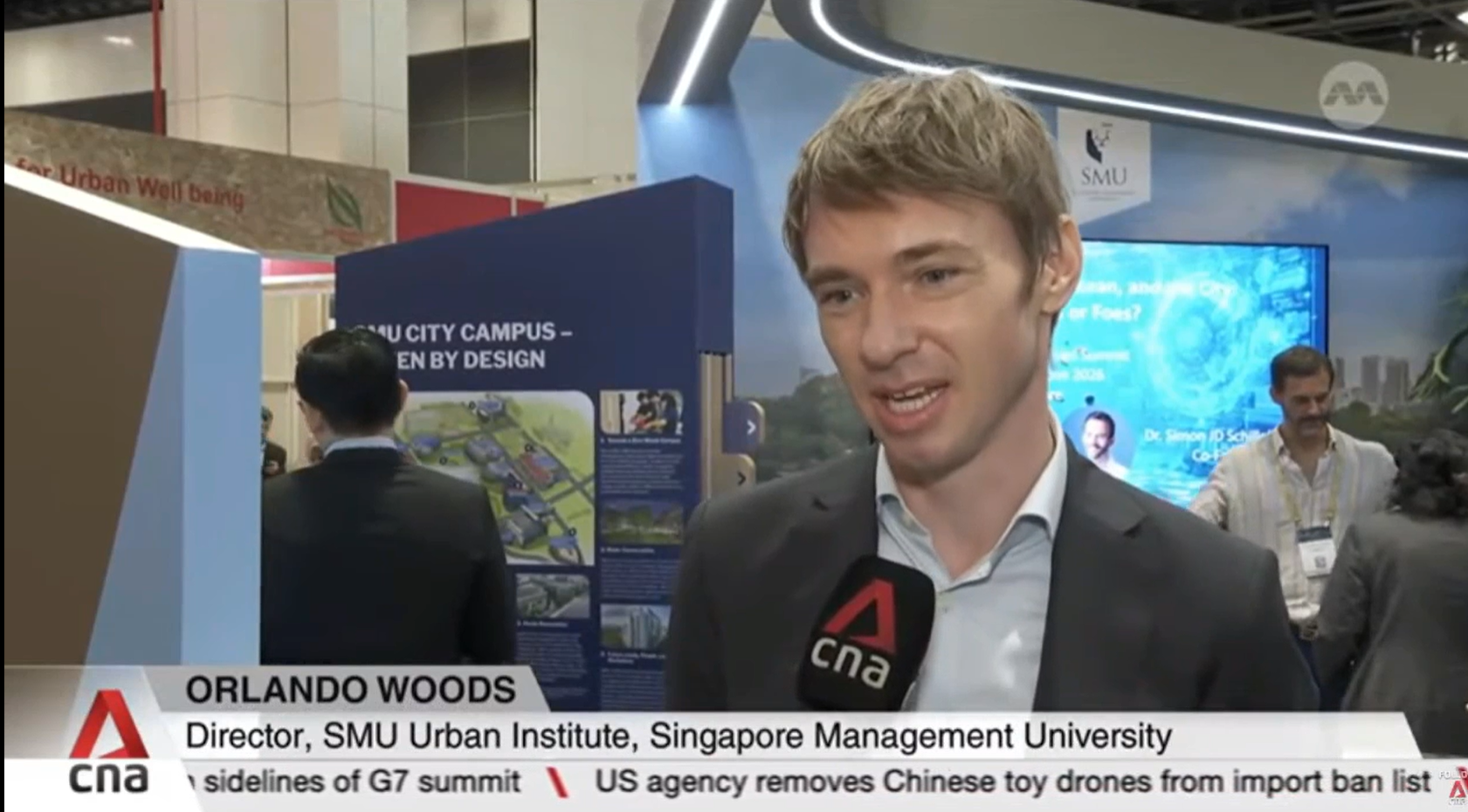
In a feature exploring how artificial intelligence could shape the cities of the future, Professor Orlando Woods, Director of the SMU Urban Institute, discussed how AI-powered models and digital twins can support urban planning and decision-making. By enabling planners to better understand complex urban systems and test different scenarios, these technologies have the potential to enhance evidence-based planning and improve urban outcomes.
Professor Woods also emphasised that the successful adoption of AI depends on addressing important challenges relating to data privacy, public trust and model reliability. He noted that while AI can strengthen planning processes, it cannot compensate for poor planning. Robust governance, effective institutions and strong planning foundations remain essential for technology to deliver meaningful benefits.
Building Climate-Resilient Cities
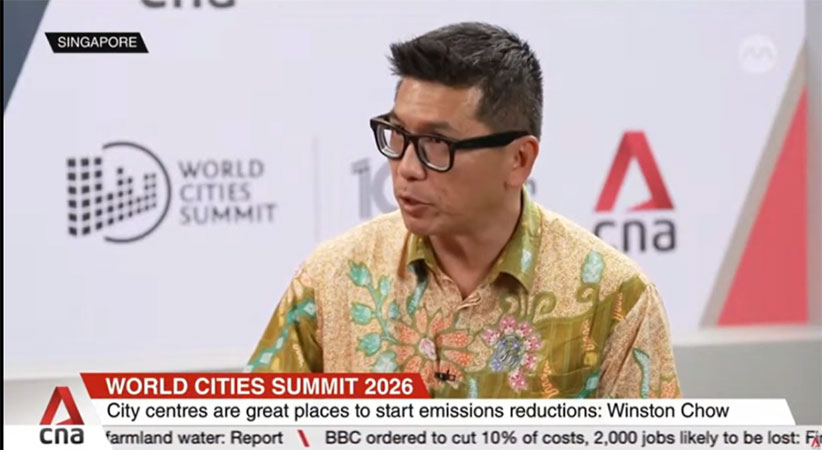
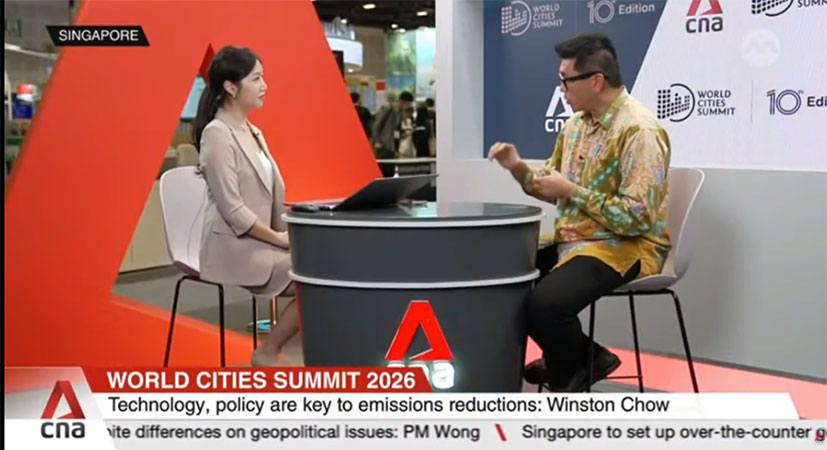
In a separate interview on climate resilience, Professor Winston Chow, IPCC Co-Chair and Research Pillar Lead (Urban Systems), reflected on the growing risks cities face from rising temperatures, urban heat island effects and increasing water stress. He stressed the importance of moving beyond discussion towards implementing practical solutions that both strengthen resilience and reduce greenhouse gas emissions.
Professor Chow also highlighted the need for governance frameworks, community participation and sustainable financing mechanisms that enable cities to scale adaptation and mitigation efforts effectively.
Advancing Sustainable Urban Futures
Together, the two interviews underscored a common theme emerging from the World Cities Summit 2026: the future of cities will depend not only on technological innovation, but also on thoughtful planning, effective governance and the ability to translate research and ideas into meaningful outcomes for communities.
As urban populations continue to grow and climate pressures intensify, building liveable, resilient and inclusive cities will require sustained collaboration across governments, industry, academia and communities.