

Workshop: Cooling People, Not Spaces: Rethinking Thermal Comfort
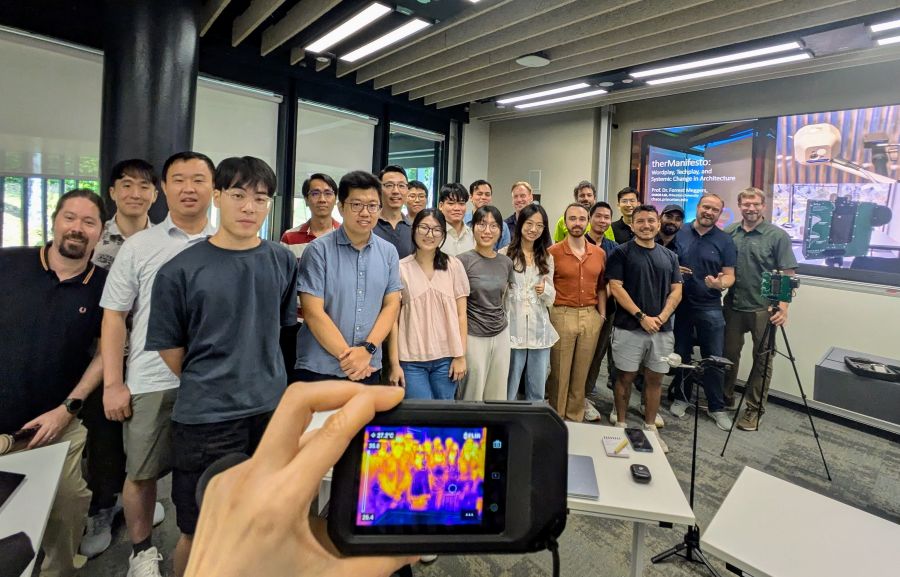
What does it mean to rethink thermal comfort from the perspective of people rather than spaces?
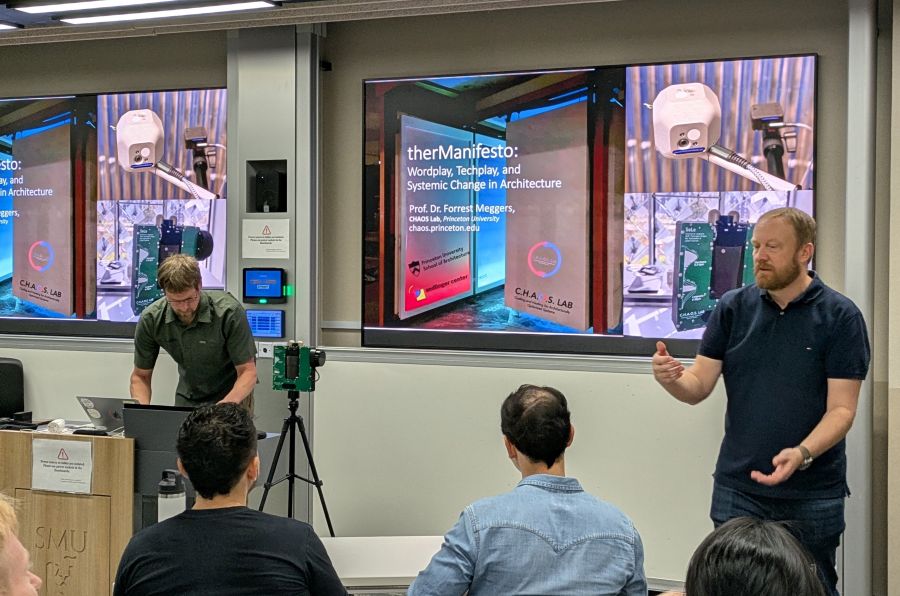
The SMU Urban Institute recently hosted Associate Professor Forrest Meggers from the School of Architecture and Andlinger Center for Energy and the Environment at Princeton University for a two-part workshop exploring the science, measurement, and design of thermal comfort. The workshop highlighted the value of international scholarly exchange and the opportunities it creates for research dialogue and collaboration.
On Day 1, Prof. Forrest invited participants to move beyond the familiar question, “What is the room temperature?” The human body is constantly generating and losing heat. This exchange is shaped not only by the surrounding air, but also by humidity, air movement, and, importantly, radiant heat exchange with surrounding surfaces and people.
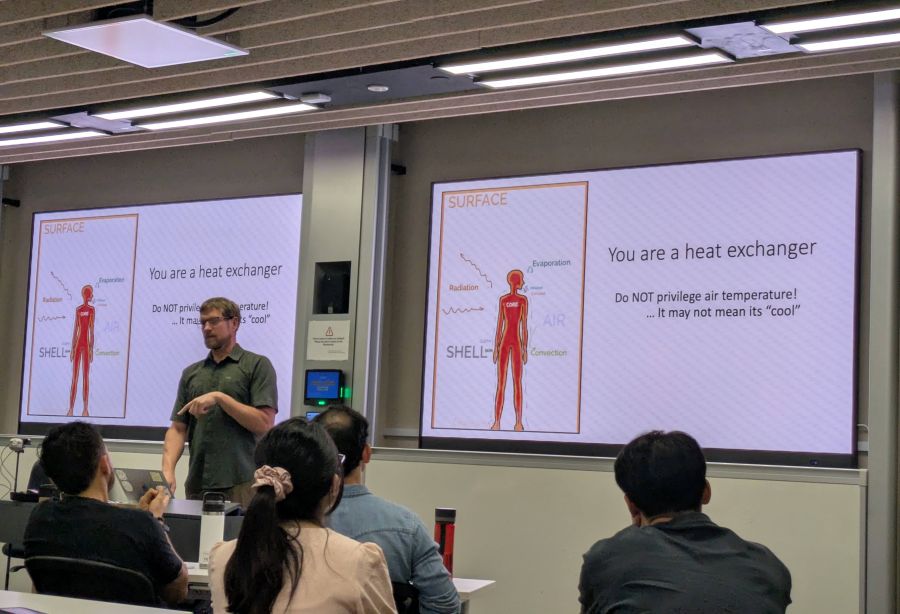
Using thermal imagery, Prof. Forrest demonstrated how people can experience different levels of thermal comfort within the same room, even when the air temperature remains unchanged. A warmer wall, a cooler surface, direct sunlight, or the position of people within a space can all affect radiant heat exchange. As a result, a room that appears comfortable according to a thermostat may not feel equally comfortable to everyone in it.
The workshop also examined the limitations of conventional approaches to measuring thermal comfort. While assessments often focus on air temperature and humidity, radiant conditions can vary considerably within a space and are more difficult to capture. Participants were introduced to alternative approaches for understanding and measuring these conditions, including the human body itself as an important indicator of thermal experience.
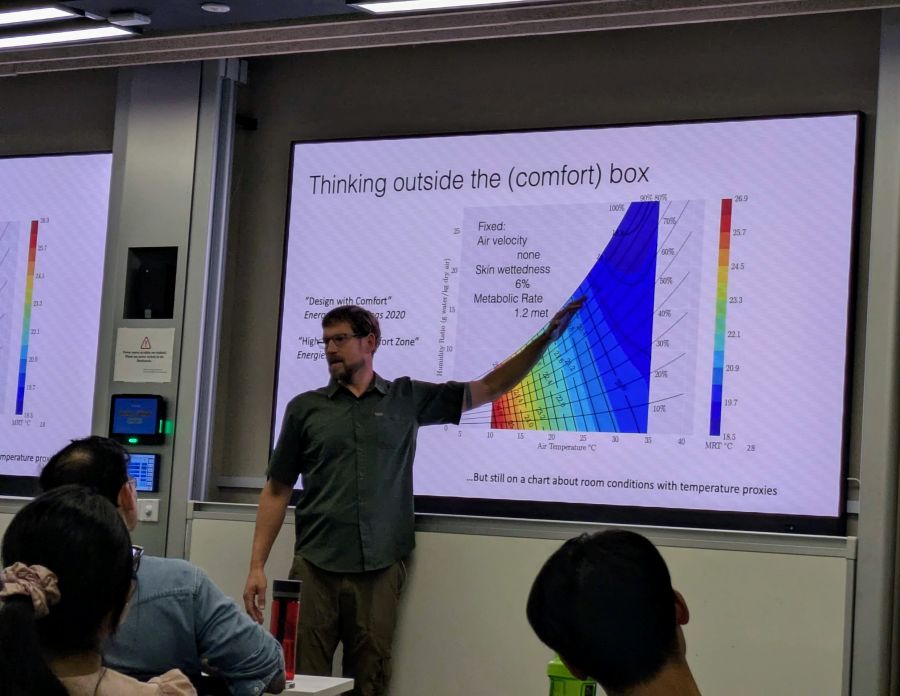
Prof. Forrest also shared research and design interventions that use radiant cooling to create more targeted cooling effects, including prototypes tested in Singapore. Rather than cooling an entire space uniformly, these approaches seek to cool people more directly, offering possibilities for lower-energy and more adaptable forms of thermal comfort in tropical urban environments.
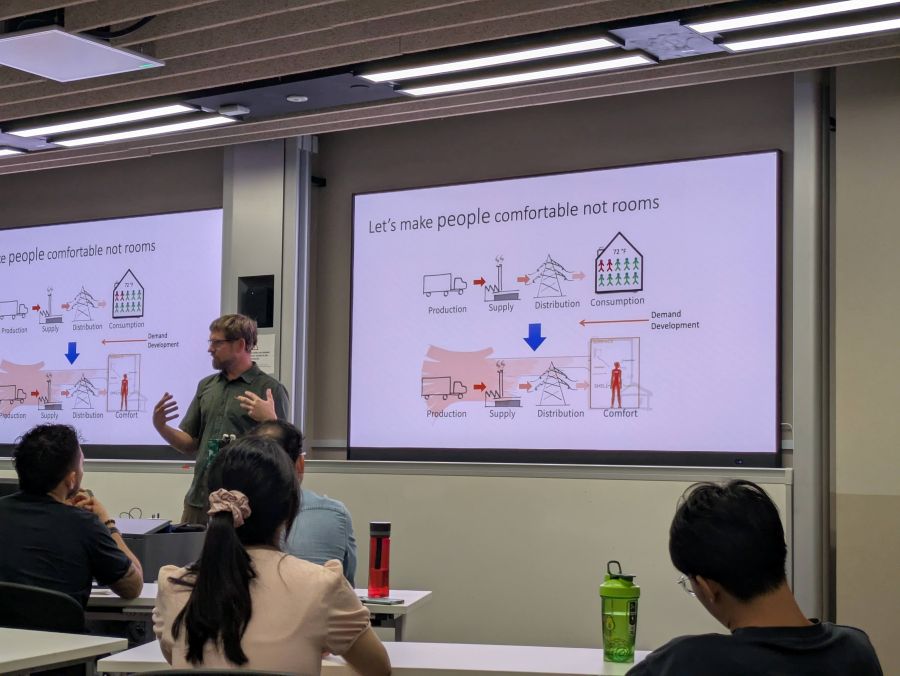
On Day 2, the workshop focused more deeply on sensors and instrumentation. Participants explored the tools and techniques used to characterise thermal and radiant conditions before heading outdoors for a practical walk that demonstrated the physics of radiant energy in real-world environments.
The sessions provided an opportunity to connect fundamental principles of heat exchange with practical questions of urban design, building performance, and everyday thermal experience.
We thank Prof. Forrest Meggers for the generous and thought-provoking sessions; Associate Professor Clayton Miller, UI’s Urban Fellow (Urban Systems), for facilitating the discussions; and all participants for their active engagement and contributions.
We look forward to Forrest’s continued engagement with the SMU Urban Institute, including opportunities for collaboration with our researchers at the intersection of thermal comfort, design, and sustainable urban environments.