

The role of the IPCC as a boundary organisation
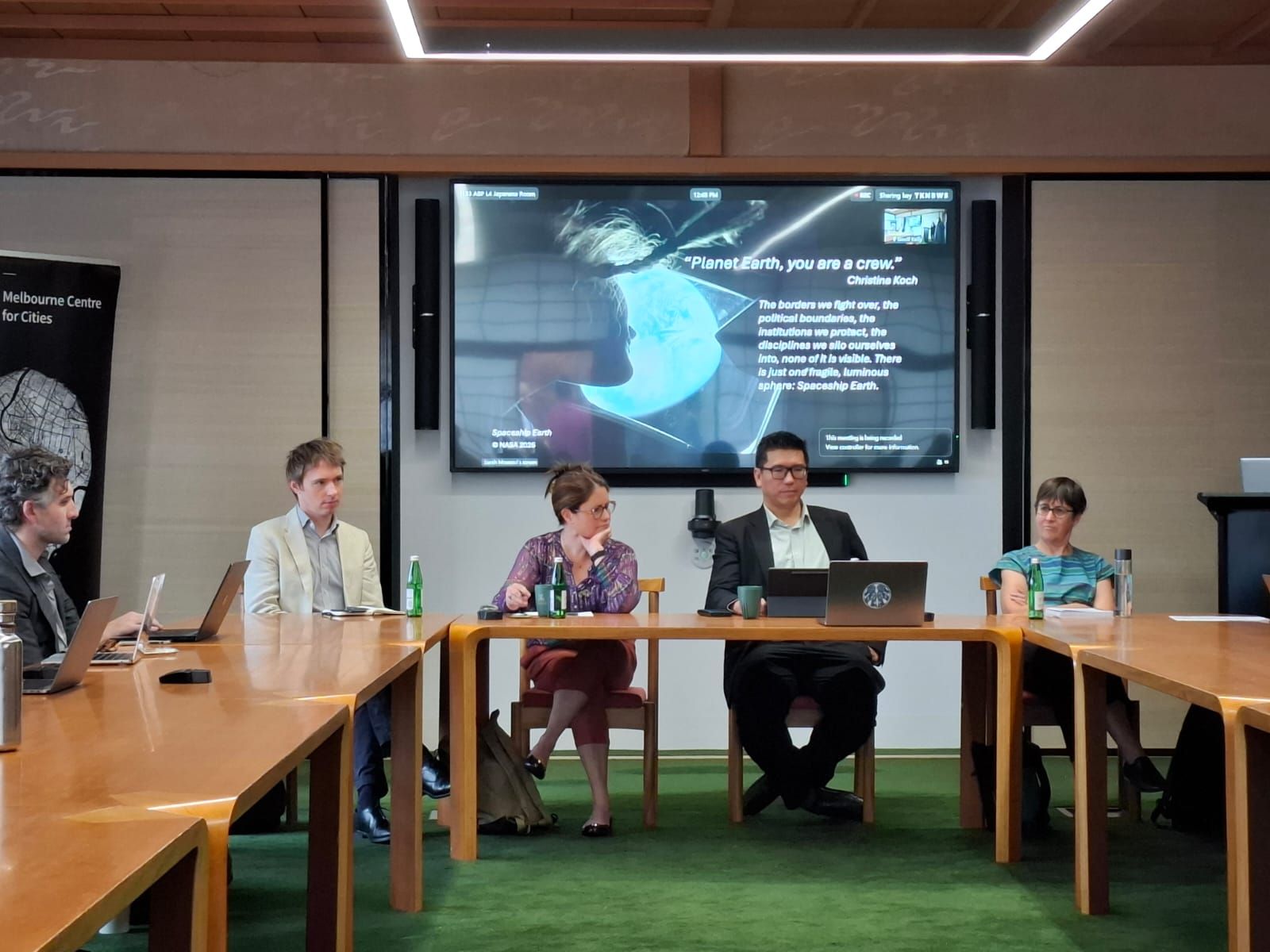
At today’s panel discussion, co-hosted by the University of Melbourne’s Melbourne Centre for Cities and Faculty of Architecture, Building and Planning, experts examined how the Intergovernmental Panel on Climate Change (IPCC) functions as a boundary organisation, bridging global climate science with policy, practice, and communities.
The discussion brought together leading contributors, including Winston Chow, Co-Chair of IPCC Working Group II and Pillar Lead (Urban Systems), and Orlando Woods, Director of the SMU Urban Institute at Singapore Management University, alongside Kathryn Bowen of Melbourne Climate Futures and IPCC AR7 Lead Author, as well as University of Melbourne researchers Judy Bush and Bridget Keane. The session was moderated by Sareh Moosavi.
Key themes explored during the discussion included:
• How research can be better aligned with the needs of policymakers and communities
• The role universities can play in translating complex climate data into actionable insights
• How engagement models can evolve beyond academia to enable meaningful real-world impact
These conversations are increasingly important as cities navigate complex and interconnected climate challenges. The discussion reinforced the value of stronger linkages between science, policy, and practice to support informed decision-making and effective climate action.
The panel also resonated strongly with the SMU Urban Institute’s ongoing collaborations with the University of Melbourne and partners through the Global Alliance on Sustainable Urban Societies (GASUS). Such partnerships continue to strengthen collective efforts to translate urban research into practical solutions and measurable impact.
For additional information, please see the links below.
The role of the IPCC as a boundary organisation