

How Better Information Helps Cities Move Smarter
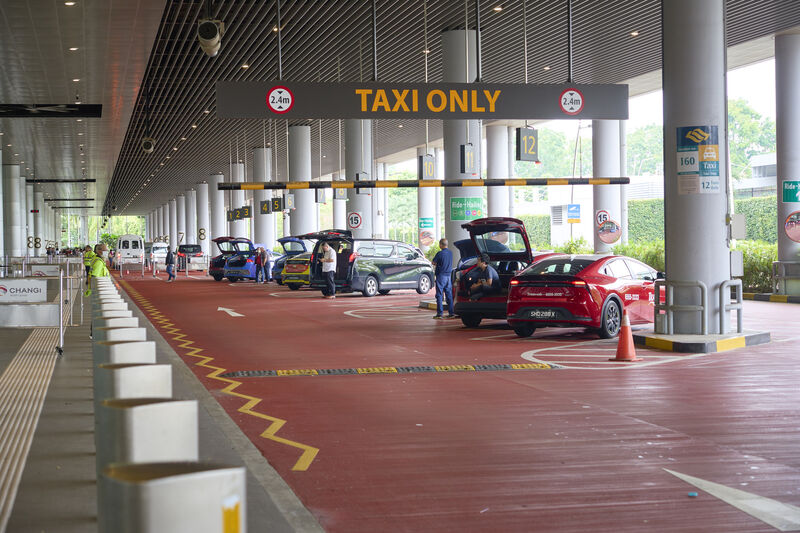
How can real-time information improve the way cities move? New research by SMU Urban Institute Urban Fellow (Urban Systems) Professor Shih-Fen Cheng from the SMU School of Computing and Information Systems, together with his collaborators, provides compelling data-driven evidence that information itself can be a powerful tool for more efficient urban transport.
Published in The Review of Economics and Statistics, the study uses Singapore’s Changi Airport as a natural experiment to examine the impact of digital information boards displaying taxi queue lengths and flight arrival data. The findings are striking: taxi drivers experienced a 10.77% reduction in waiting times, earned approximately USD 3.70 more per day, and operated more efficiently with less wasted driving time.
At the heart of the study is the concept of reduced “search frictions”—when better information helps individuals make faster and more informed decisions. While the research focuses on airport taxi operations, its implications extend far beyond transport, offering insights into how cities can better manage logistics and other decentralised urban systems through smart, real-time data sharing.
Why it matters: This research highlights how transparent, timely information can deliver tangible benefits for workers and commuters alike, advancing SMU Urban Institute’s mission to develop data-driven, people-centred solutions that help cities function better—one insight at a time.