
Designing Workplaces That Work for People: Perspectives from the Human Factors & Ergonomics Society of Singapore Discussion Panel
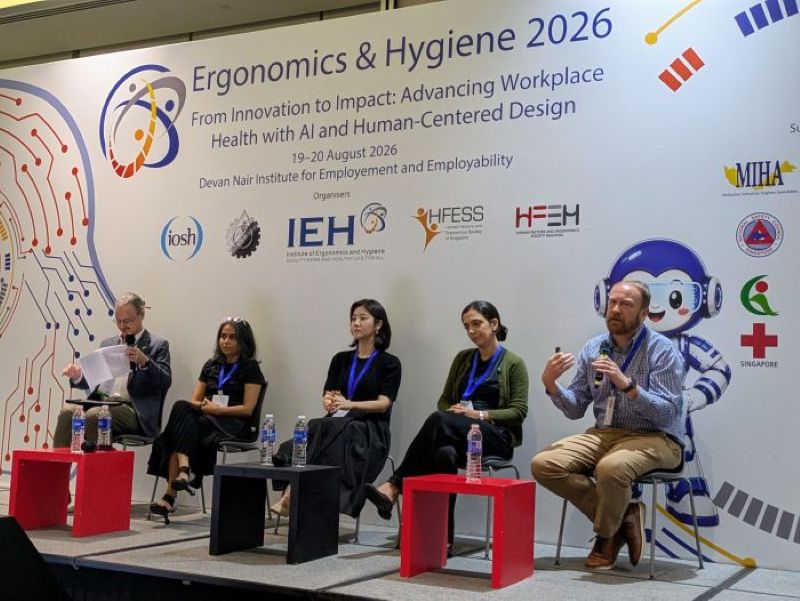
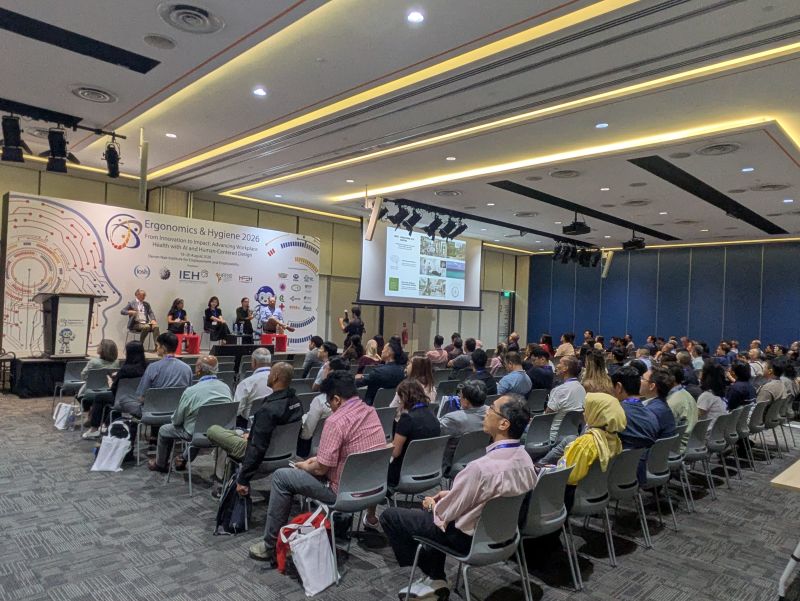
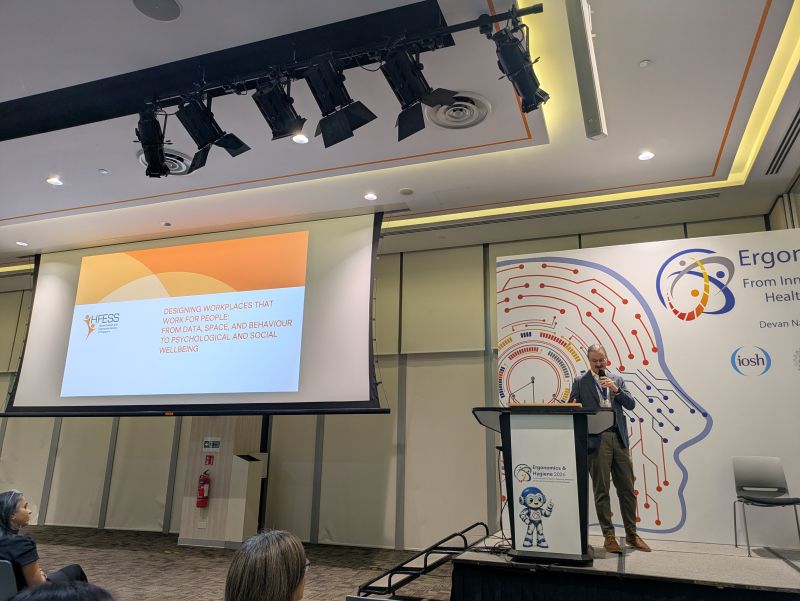
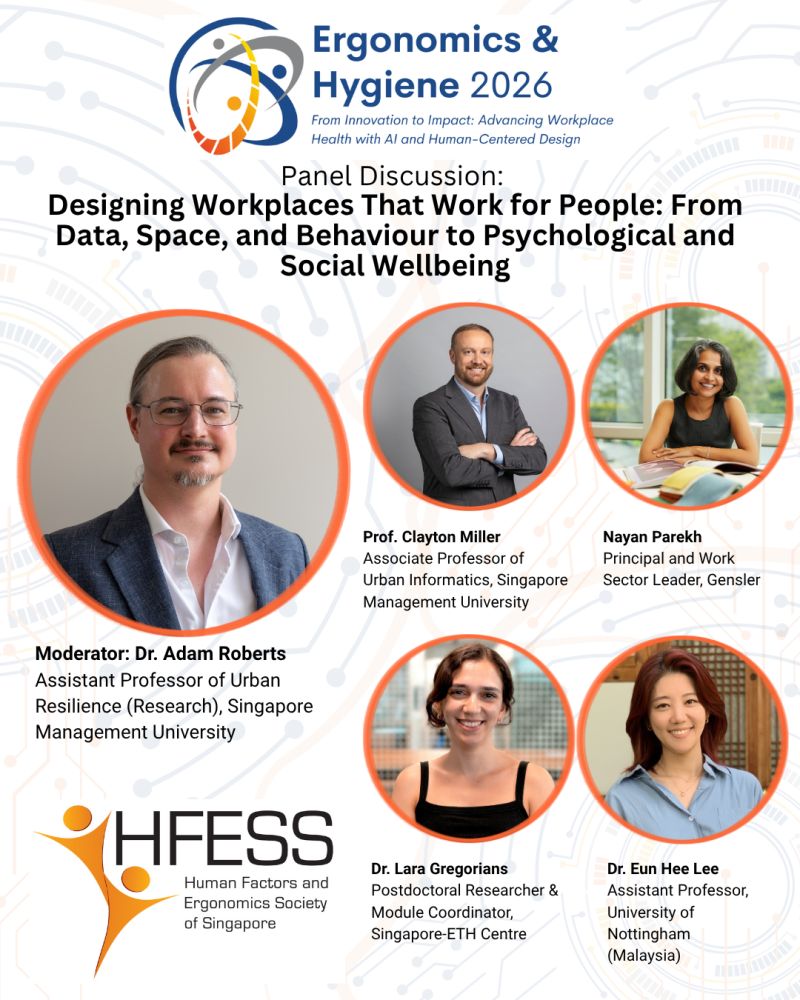
During the IEH (Institute of Ergonomics and Hygiene) 2026 Ergonomics and Hygiene Conference and Exhibition on 19 August, SMU Urban Institute’s Prof Adam Roberts moderated the panel, “Designing Workplaces That Work for People: From Data, Space, and Behaviour to Psychological and Social Wellbeing,” hosted by the Human Factors & Ergonomics Society of Singapore (HFESS).
Bringing together perspectives from urban informatics, architectural cognition, environmental psychology and design, the panel explored how multidisciplinary urban research can contribute to creating human-centred environments that support how people work, feel and connect.
Setting the scene, Adam posed a simple but important question: we spend much of our time thinking about what a workplace should look like, but perhaps less time considering how it feels to work there. Does it help us concentrate? Encourage social connection? Support wellbeing?
Joining him were Prof Clayton Miller, Urban Fellow (Urban Systems) at SMU Urban Institute and SMU College of Integrative Studies, Singapore Management University; Dr Lara Gregorians of Future Cities Laboratory Global; Prof Eun Hee Lee of the University of Nottingham Malaysia; and Nayan Parekh of Gensler.
Designing for people, not averages
Drawing on crowdsourced data collected across Singapore, Clayton shared how people can experience the same environmental conditions very differently. In relation to thermal comfort, for example, some people consistently prefer more air-conditioning, while others are largely unbothered. This highlights the limitations of designing workplaces around an “average” user.
Clayton also shared research exploring how personal and environmental data could enable customised nudges, such as encouraging individuals to move towards a quieter space when appropriate. The broader vision is to move beyond a one-size-fits-all workplace towards environments that can respond to different needs and preferences.
The other panellists offered complementary perspectives. Lara highlighted how our experience of space depends on context, time and the tasks we are performing. Eun Hee discussed how perceived control over our environment can influence wellbeing and acceptance of a space. Nayan explored how workplace design can provide greater choice and flexibility to accommodate different people, including neurodivergent individuals, and different ways of working.
Towards more adaptable workplaces
A common thread emerged throughout the discussion: there is no single ideal workplace. People and tasks differ, and organisations change over time.
Designing for wellbeing therefore means asking the right questions, providing meaningful choice and control, and creating spaces that can adapt to changing needs.
Many thanks to HFESS, IEH and all the panellists for a thought-provoking discussion on how we can design workplaces that work better for people.